“The terrible, exasperating thing about humans is how goodness and gentleness, and utter depravity and disregard for human life, can be contained within the same person, and in terrifyingly close proximity.”
― Norman Mailer, The Executioner's Song
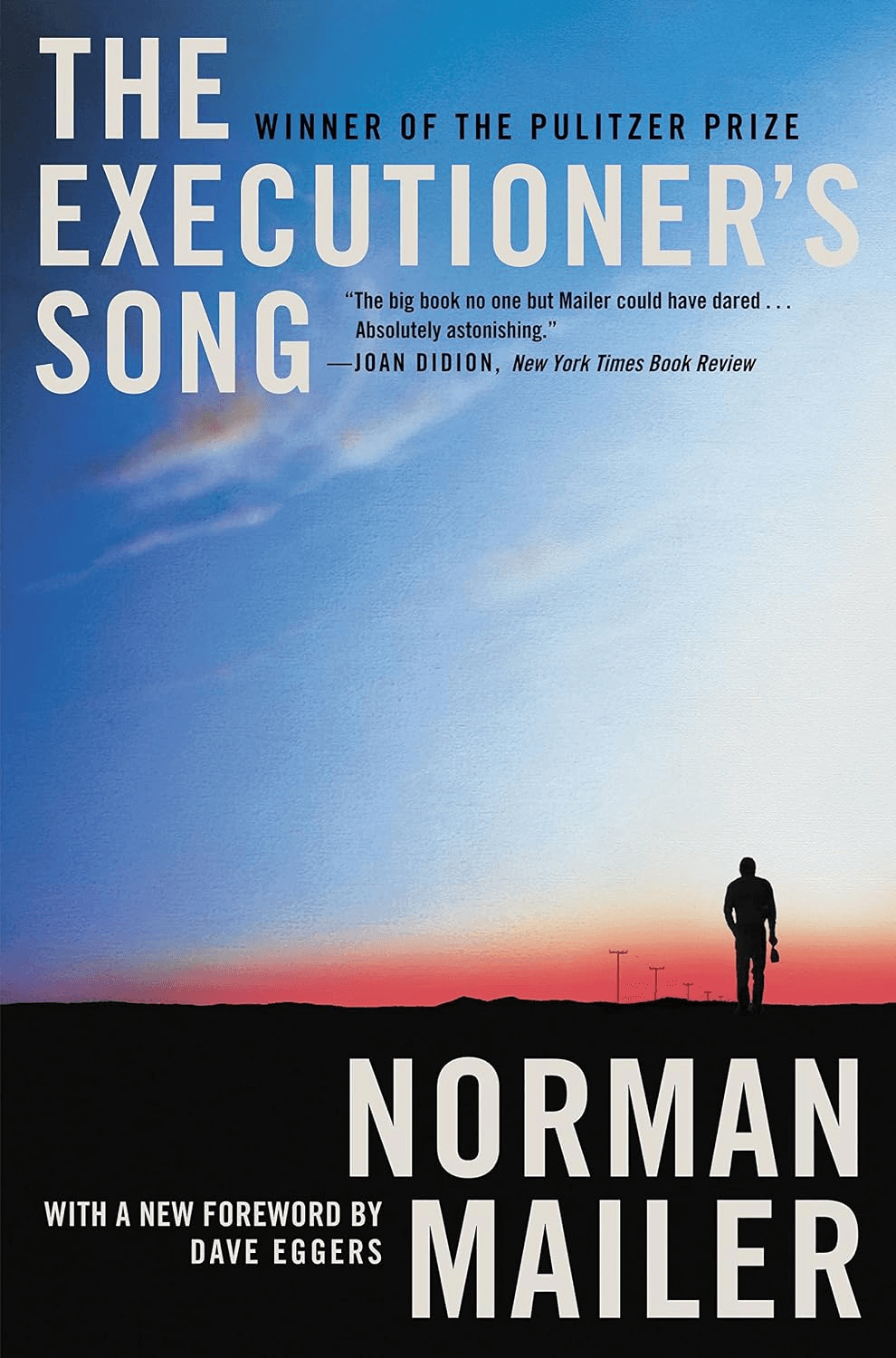
The concept of capital punishment works well enough on paper. An eye for an eye, a tooth for a tooth — the ancient math seems to check out. The problem, if you ask Pulitzer Prize-winning journalist Norman Mailer, isn't in the concept. It’s in the execution.
In his novel The Executioner’s Song, Mailer explored the grotesque economy of the justice system in detail: checkbook journalism, ambitious lawyers, media moguls, on and on and on. He explored the sweeping toll that crime, recidivism, institutionalization and social reform failures take on both victims and perpetrators.
Despite how mangled the process of crime and punishment leaves almost everyone involved, the justice system has done its best to sanitize the experience. Lawmakers have developed a special set of language to frame it all to “help voters understand.” Media personalities report in gentle words that tiptoe around the grim reality of an execution. We speak about the whole procedure in headlines, not in complete sentences that have clear meanings. Execution stayed. Death penalty. Justice served. It’s in this ridiculous misrepresentation that Mailer revels.
Mailer observed, too, that we have created whole industries and rituals surrounding the process of executions. Much of it, he would suggest, is theatre for investors, lawmakers, decisionmakers, and the all-powerful court of public opinion.
The goal of this and other strange social customs is to give retribution the look, sound, and feel of a well-oiled machine. Just one simple, sterile needle prick is all it takes for the most heinous of monsters to atone for their sins. No muss, no fuss, and definitely no blood on anyone’s hands — no one but the bad guy's, of course! And they all lived happily ever after.
I know that, if Mailer had been watching Christa Pike struggle to die at the spectacularly bumbling hands of the State of Tennessee this September, he would point emphatically to another perfect example of this whole sterile facade collapsing to our collective horror.
In the pages of his sprawling true crime novel, you can find a grim lesson that this American author has been trying to teach us since the 70s: The machinery of vengeance doesn’t ever balance the scales cleanly. That math only works out if we’re all willing to look away.
And on Wednesday, September 30, the Riverbend Maximum Security Institution accidentally ripped the blindfolds off all of us. So, for just a minute, let’s gawk, shall we? Let’s look at exactly what happens when the state tries to sort it out, à la The Executioner’s Song.

Christa Pike was supposed to be drawing her last breath quietly around 7:30 PM. As the first woman scheduled to be put to death by the state in over two centuries, her execution was always going to be a media spectacle, long before anything went awry.
But go awry it did. The lethal dose of pentobarbital she received was botched upon injection. As a result, the cocktail pooled in her tissues instead of circulating in her bloodstream (a complication that causes a kind of internal chemical burn).
Behind the glass, the audience watched a woman gasp, snore, and struggle for air, crying out eventually to ask the room if her death was supposed to hurt this much. For the next hour, the observation room curtains fluttered open and closed like her ragged breathing. Finally, at 8:30 PM, an hour after the process started and two doses of pentobarbital had been improperly injected, the state called the whole thing off in a haze of bureaucratic confusion.
It wasn’t the end anyone hoped for — certainly not the condemned. In her final words, Christa Pike spoke of leaving this world the way she had lived most of hers: in peace and love. But there was certainly no peace or love in the crime that put her on that gurney thirty years ago.
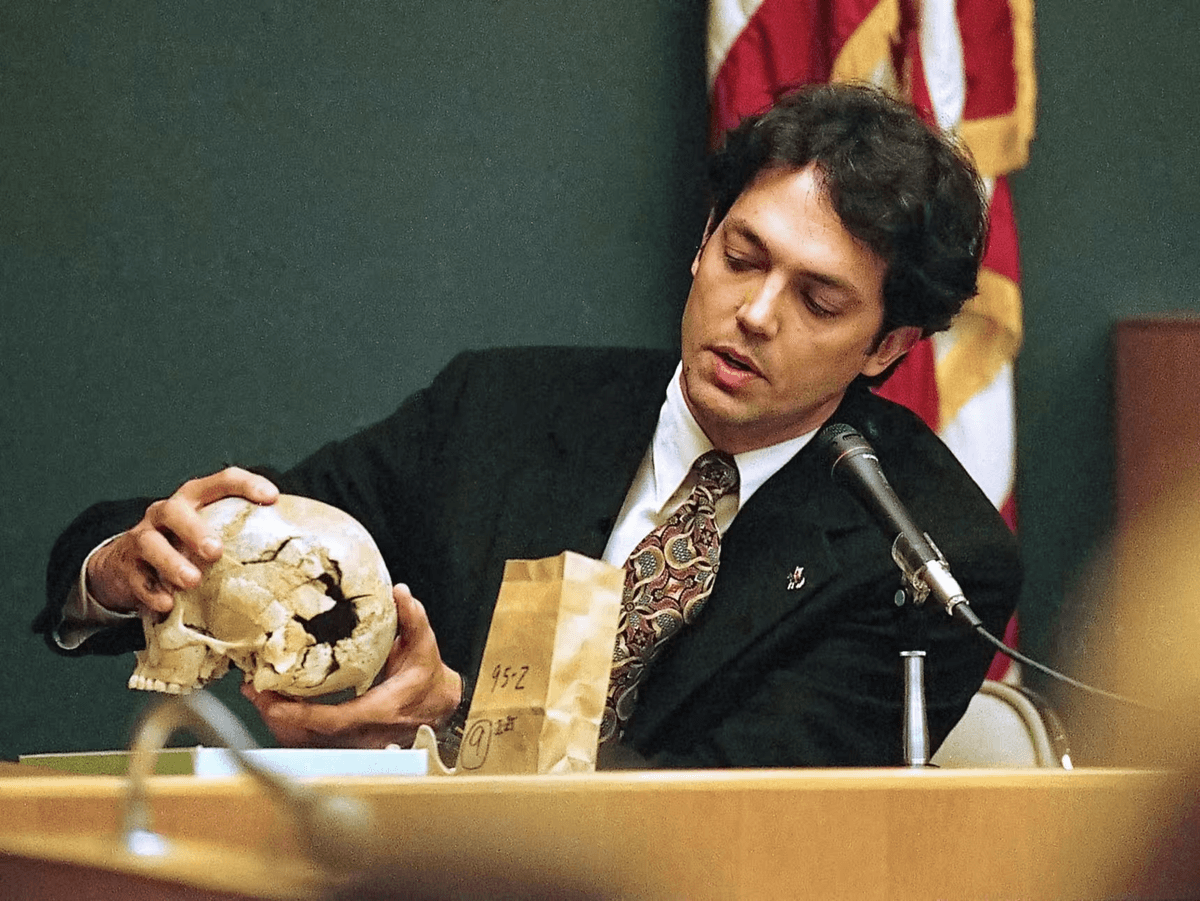
In the summer of 1995, an 18-year-old Pike and two accomplices lured 19-year-old Colleen Slemmer into the woods. They beat her, slashed her body brutally, and carved a pentagram into her chest with a box cutter before finally bludgeoning her to death with chunks of asphalt. They tortured Slemmer for, in a grimly fitting parallel, roughly an hour.
But debating this singular tragedy misses a perfect opportunity: the chance to recognize a bigger pattern of bureaucratic malpractice that has been documented in detail for decades. The real story that I wish would circulate in the news cycle is not this crime, these perpetrators, or even the industries that capital punishment finances (although the man who wrote the definitive book on the subject might disagree with me there).
The real newsworthy center ring of this sad circus is the spectacle America makes by neutering itself. By manipulating language, agency, institution, and release of information, we can all discuss how we feel about a modern-day tar-and-feathering without getting the ick. That whitewashing feels more wrong to me than having to pay for the whole thing.
If you are the kind of person who isn’t above a deep-dive into kiwifarms to find redacted files or censored videos, you are perfectly suited to this sort of deep-dive journalism. Long before the era of Mr. Ballen and Bailey Sarian, Norman Mailer’s true crime odyssey was the holy grail for budding armchair profilers. He practically invented the prestige true crime genre as we use it today.
Clocking in at over a thousand pages, it is foundational text in my personal lore. Mailer wrote in the New Journalism style of the '60 and 70s that I often refer to as creative nonfiction. The genre, founded by Truman Capote1 with his absolutely seminal text In Cold Blood, takes the flat, objective sterility of the evening news and pumps it full of technicolor.
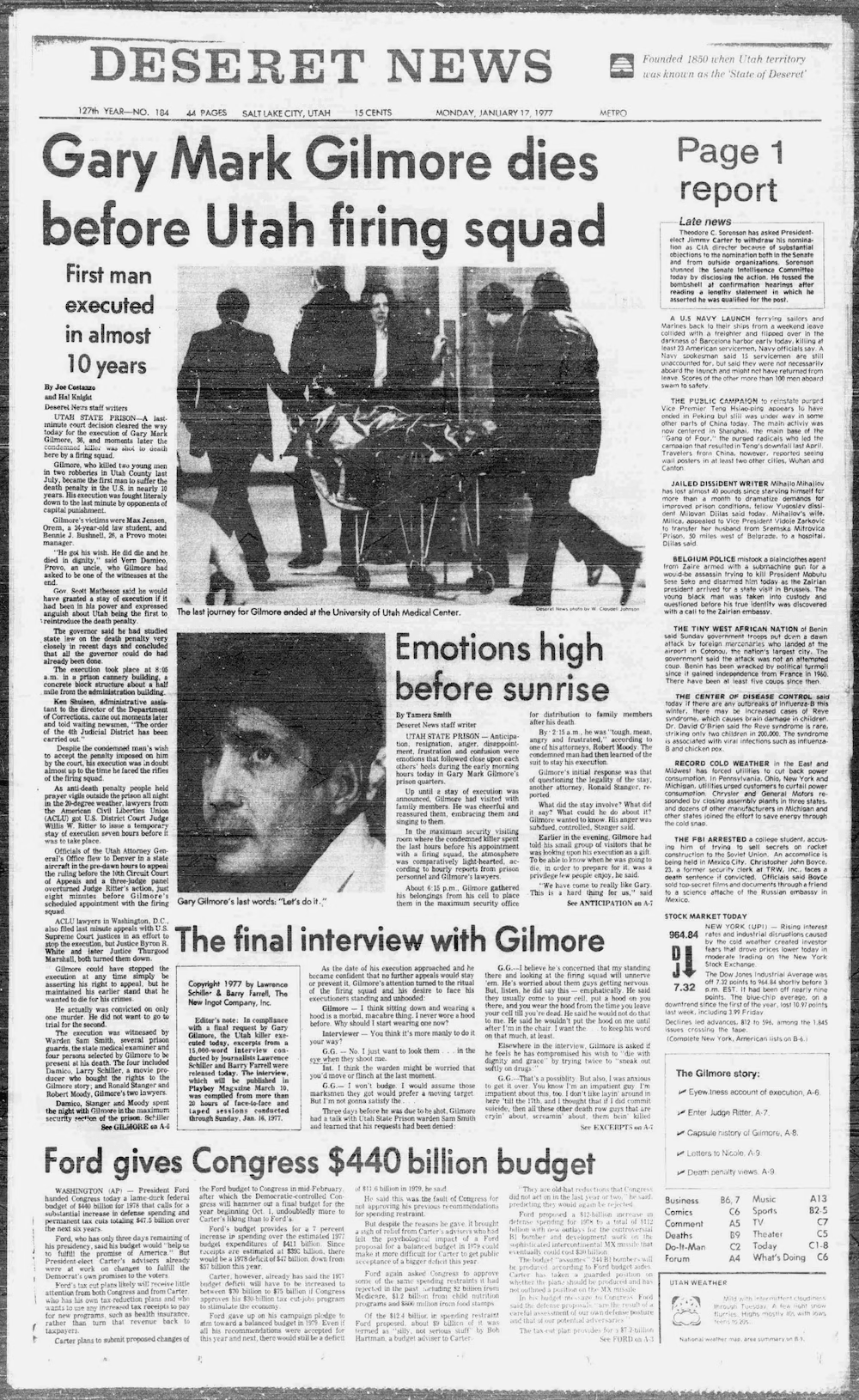
The Executioner’s Song tracks the story of Gary Gilmore, who was 35-years-old in 1977. After committing two murders just three months after his release from prison, he became the first person executed in America after a 10-year moratorium on capital punishment.
Gilmore did not fight to live as Pike has. In fact, he went the other way entirely, demanding to be put to death by firing squad. He waived all his appeals, staring down the state and daring them to kill him expeditiously. And they obliged, much to the horror of many Americans.
Gary’s death was much different than Christa’s. It worked, for one thing. It was a violent, bloody end that made no pretense about what it was. Ironically, it seems like a merciful final act compared to Pike’s failed procedure. And his final words? No mention of peace or love from Gilmore; instead, he simply said, “Let’s do it.”3 This get-on-with-it attitude flustered the judicial system mightily back then, just as Pike’s failed execution and question mark of a future has now.
You can see our limp but continued efforts to medicalize the death penalty over time. We traded bullets for syringes in almost every state, dressing up capital punishment in the sterile language of pharmacology to make it palatable for us, the audience (AKA “the voters who decide how to pay for it all.”)
Nowhere is that theater clearer than in the official statement from Tennessee officials following the incident. Failing to secure and test an IV line is a misfire that delayed justice, revictimized the survivors, and halted all further executions for the rest of the year. Where integrity and responsibility could have opened a discussion about fixing this broken system, the state insisted instead, without flinching that they acted "in accordance with the established protocol." It’s a response ripped straight from The Executioner’s Song’s bleakest chapters.
By exploring the impact of Gilmore’s life and death on his mother, his lovers, the lawyers involved, and the community in which they lived, Mailer exposes a vast radius of casualties anchored to each individual death in this story.

There’s so many more reasons to read The Executioner’s Song — so much to learn. One of my biggest takeaways from Mailer's exhaustive account is that it puts a human face on the data behind recidivism (which is the statistical likelihood of a convicted criminal reoffending and returning to criminal behavior or prison after serving a sentence). Specifically, I felt like Gary Gilmore’s short and violent life highlighted the dangers of early incarceration and the critical "first year out" window.2
The brilliance of The Executioner’s Song is in its lack of glamour. Norman Mailer’s dry, matter-of-fact dissection strips away the theatrical drama of reporting to reveal the unforgiving and often absurd machinery of the justice system — the paperwork, the wardens, the media producers, and the checkbook contracts hastily written just to maintain the illusion of order.
We want to believe the machinery of vengeance balances the scales — or at the very least makes an honest attempt. But the truth is, we have enough data to draw a different conclusion: the system relies entirely on our willingness to look away, not its ability to function. It requires us all to accept the clinical fiction; without that, too many people would be unable to stop asking themselves questions about how this happened, or why. If you were to look closely at our best collective efforts to exact an emotionless, humane, final end to someone’s life, you wouldn’t walk away very impressed either.
The Executioner’s Song is the antidote to our collective, bureaucratic blindness. If you think you have an opinion on the death penalty, I encourage you to read this book. When presented with nothing but a mountain of facts, it’s hard not to see how repeatedly broken the whole process is. And Mailer absolutely refuses to let you look away. He drags you by the collar and forces you to sit in the mind-numbing banality of the appeals, to stare down the life we are ending, and to explore the deep, enduring grief of a life lost to violence until you can easily tally the human cost of what the state tries to hide behind a drawn curtain.
An eye for an eye might sound like simple math when you're reading the evening headlines. But stripping away the euphemisms leaves us with the same raw, devastating truth Mailer3 found in Utah nearly fifty years ago: the machinery of vengeance doesn't actually balance the scales. It just leaves us all a little more blind.
So, at the risk of putting too fine a point on this, how many more people have to die before you pick up a copy of this book?4
1 These books are vastly different, I feel I should add. In The Executioner’s Song, Mailer lays bare the sprawling, bureaucratic absurdity of the justice system in documentary-adjacent detail. It is sprawling and considers every angle of the story from its earliest possible beginnings to its epilogue. Capote gave us something entirely different with his 1966 work In Cold Blood. Often credited as the literary ground zero for the nonfiction novel, it recounts the 1959 slaughter of the Clutter family: four innocent people brutally murdered in their Kansas farmhouse by two drifters, Richard "Dick" Hickock and Perry Smith. It is written with his signature Breakfast at Tiffany’s glamour — so much so that I think, compared to Mailer, it eclipses the story.
2 Where the statistics provide the what of recidivism, Mailer's novel provides the why. The Executioner's Song demonstrates that when an individual is practically raised by the penal system, releasing them without immense transitional support often results in a rapid, and sometimes fatal, return to crime.
Funny side story: not only does Gary Gilmore succumb to this stereotype, but so does Jack Henry Abbott, a longtime inmate and writer whose release Mailer advocated for following his examination of Gilmore. Abbott also committed a violent crime after his release. Sometimes life really is stranger than fiction.)
3 Speaking of truths, here's one that isn't so much devastating as bizarre? Gary Gilmore’s final words (“Let’s do it”) were the direct inspiration for Nike’s famous “Just do it” slogan. You can not make this up.
4 Having spoken to how incredible Mailer’s writing is, I would be really remiss not to mention what an extraordinary asshole he was. Like, he maybe should have made his last book about himself. He’s a wife-stabbing misogynist who once said “a little rape is good for a man’s soul.” He bit part of Rip Torn’s ear off on a movie set. He’s really a perfect example of the adage that you can be extraordinary at something but also a terrible person — the two things are not mutually exclusive.